
If you're hunting for a misting nozzle cleaner in North Richland Hills, TX, you already know the golden rule of surviving a DFW summer: a working misting system is absolutely non-negotiable. Across the Mid-Cities area including Hurst, Bedford, and Euless, homeowners and restaurants rely on professional cooling systems to keep outdoor spaces comfortable. Clogged nozzles are the number one enemy of that comfort, turning a blissfully cool mist into a frustrating drip.
Getting the cleaning right is everything.
Why Clean Nozzles Are Your Best Defense Against Texas Heat
A high-pressure misting system isn’t just spraying water around. It’s performing a bit of scientific magic called flash evaporation. When everything is working as it should, the system atomizes water into a micro-fine mist that evaporates almost instantly. This process actively pulls heat from the air, creating that amazing '30-degree drop' in temperature you invested in.
It’s the secret to actually enjoying your North Richland Hills backyard on a blazing July afternoon.
The problem is, the hard water we have throughout Tarrant County is loaded with minerals like calcium and magnesium. Over time, these minerals build up inside the tiny orifices of your misting nozzles, and that’s when the trouble starts.
A single clogged nozzle doesn't just reduce the mist—it kills the cooling effect entirely. Instead of flash evaporation, you get dripping, sputtering, and a heavy, damp spray that makes your patio furniture and guests feel sticky. It’s the exact opposite of the refreshing escape you wanted for your DFW home or business.
The Impact of Clogged Nozzles
Even a small blockage has a huge impact on performance. When nozzles start to clog, you’ll notice a few problems that no one with a patio in the Mid-Cities wants to deal with:
- Poor Cooling: The system simply can't produce the fine mist needed for that significant temperature drop.
- Wet Surfaces: Instead of vanishing into the air, water droplets fall and collect on your furniture, patio deck, and guests, creating a damp, uncomfortable mess.
- Increased System Strain: Blockages create back-pressure, which puts a ton of unnecessary strain on your high-pressure pump and can even shorten its lifespan.
Keeping those nozzles clean isn't just about comfort; it's about protecting your investment. It’s no surprise the global market for cleaning nozzles was valued at US$ 252.4 million in 2022 and is projected to hit US$ 359.1 million by 2031. For Texas home and business owners in places like Colleyville, Grapevine, and Keller, that trend highlights a simple truth: proper maintenance is key to a long-lasting system that works when you need it most.
Clean misting nozzles are a critical first step to boost outdoor comfort, but they work best as part of a complete strategy for your patio.
Getting Your Nozzle Cleaning Kit Together
Alright, let's get those nozzles spraying like new again. Before you can tackle the cleaning process, you’ve got to have the right gear on hand. Getting everything lined up first means the job will go a lot smoother, whether you're a homeowner in North Richland Hills or a restaurant manager in Arlington.
The good news is, you don’t need a massive, specialized toolbox. You’re mostly fighting the mineral deposits left behind by the hard water we have all across the Mid-Cities, so the tools are pretty simple.
The Essential Tools and Supplies
Here's what our team recommends having ready before you even think about unscrewing a nozzle. This isn’t just a shopping list; it’s your key to getting the job done right without any headaches.
- Nozzle Wrench (or just your fingers): Some nozzles twist right off. For the stubborn ones, a small wrench that fits your specific nozzle is a must. Just be gentle—you don't want to strip the brass or stainless steel.
- Small Bowls: Grab two small, non-metallic containers. One is for soaking the nozzles in your cleaning solution, and the other is for a clean water rinse afterward.
- Soft-Bristle Brush: An old toothbrush is perfect here. You'll use it to gently scrub away any gunk after the soak. Steer clear of wire brushes! They're way too harsh and will ruin the delicate nozzle opening for good.
- Lint-Free Cloth: Perfect for drying the nozzles and your hands. The last thing you want is a tiny piece of fuzz clogging up your freshly cleaned nozzle.
Once you have your tools, it’s time to pick your cleaning solution. This is the most important choice you'll make.
Misting Nozzle Cleaner Comparison
The whole point of the cleaner is to dissolve the calcium and magnesium buildup without eating away at the nozzle itself. For our systems here in the DFW area, you’ve got a couple of great options.
We get asked all the time: should you use a professional-grade product or just stick with something simple like vinegar? Here’s a quick breakdown to help you decide.
| Feature | Professional Descaler | DIY Vinegar Solution |
|---|---|---|
| Effectiveness | Highly effective and works fast. It's specifically formulated for mineral buildup in plumbing systems. | Surprisingly effective on the kind of minerals we see in Tarrant County water. It just might need to soak a bit longer. |
| Cost | More expensive up front, but the concentrated formulas can last you a good while. | Super affordable. You're just using basic household white vinegar and water. |
| Safety | Generally safe for nozzle materials, but you need to handle it with care and make sure you have good ventilation. | Non-toxic, food-safe, and easy on the environment. A fantastic choice for any backyard system. |
| Best For | Heavily clogged nozzles on commercial systems in places like Grapevine or Arlington that run constantly. | Perfect for routine maintenance on residential systems in North Richland Hills or Colleyville. It’s the best first line of defense. |
Honestly, for most home systems, a simple mix of one part white vinegar to one part water is a powerful and safe cleaner. It has just enough acidity to break down the minerals without being too aggressive on your nozzle’s finish.
The Right Way to Clean Your High-Pressure Misting Nozzles
Alright, you've got your tools and cleaner lined up, so it's time to get those nozzles looking and working like new. Following the right process here is everything—it's how you get your system completely clean without accidentally damaging any of the delicate parts. This is a job any homeowner in the Mid-Cities can tackle, but paying attention to the details is what brings back that perfect, cooling mist.
This visual guide breaks down the core parts of the job: getting your tools, mixing the cleaning solution, and the actual cleaning itself.
As you can see, success is all in the prep work. When you have the right stuff ready to go, the cleaning part becomes simple and way more effective.
Power Down and Depressurize the System
Before you even think about touching a nozzle, let's talk safety. The very first thing you need to do is completely power down your JetStream system. Just head over to your pump and flip the switch to the "off" position.
Next, you have to depressurize the lines. Our systems are built with a drain valve for this exact reason. Open it up, and you'll hear the pressure release as the water drains out of the tubing. This stops you from getting a surprise shower and is a critical safety step we drill into all our clients, from Hurst to Bedford.
Carefully Remove the Misting Nozzles
With the system safely off and totally depressurized, you can start removing the nozzles. For most of our JetStream nozzles, you can just unscrew them by hand. If you find one that’s a bit stubborn from mineral buildup, grab a small wrench that fits the nozzle body, but be gentle.
Pro Tip: When you use a wrench, apply slow, steady pressure. You're just trying to break the seal, not muscle it off. Using too much force is the quickest way to strip the brass threads—a common and frustrating mistake we see all across the DFW Metroplex.
As you take each nozzle off, pop it straight into your empty container. This keeps them from rolling away and getting lost. And whatever you do, keep track of the tiny o-rings; they’re absolutely essential for getting a leak-free seal when you put everything back together.
Soak, Scrub, and Rinse for Maximum Effect
Now for the main event. Drop the nozzles into your cleaner, making sure they’re completely submerged. Whether you’re using a commercial descaler or your DIY vinegar mix, give them a good soak. For a vinegar solution, 30 minutes to an hour is usually the sweet spot for dissolving the tough mineral deposits we get from our Tarrant County water.
Once they've soaked, grab your soft-bristle brush (an old toothbrush is perfect) and give each nozzle a gentle scrub. Make sure to get into the threads and around the tip. This little bit of elbow grease helps knock loose any gunk the soak softened up.
If you come across a really stubborn clog, you can carefully use a pin to clear the opening. I can't stress "carefully" enough. The orifice is incredibly small, and poking it too aggressively will damage it for good.
After scrubbing, rinse every single nozzle under warm, running water. Don't skip this part. Rinsing gets rid of the mineral junk and, just as importantly, any leftover cleaning solution that could eat away at the metal over time. If you want to get a better look at what you're working with, you can explore our detailed guide on the anatomy of a misting spray nozzle.
Reinstall and Test Your System
We're in the home stretch. With your nozzles sparkling clean, put the o-rings back in place and screw the nozzles back into the mist line. Hand-tighten only. The o-ring is what creates the seal, so cranking down on it with a wrench is totally unnecessary and just risks damaging the threads.
Once all the nozzles are back in, close the drain valve, turn your water back on, and fire up the pump. Your system should roar to life with that consistent, ultra-fine mist, turning your North Texas patio back into the cool oasis you love.
Troubleshooting Common Nozzle Problems and How to Prevent Them
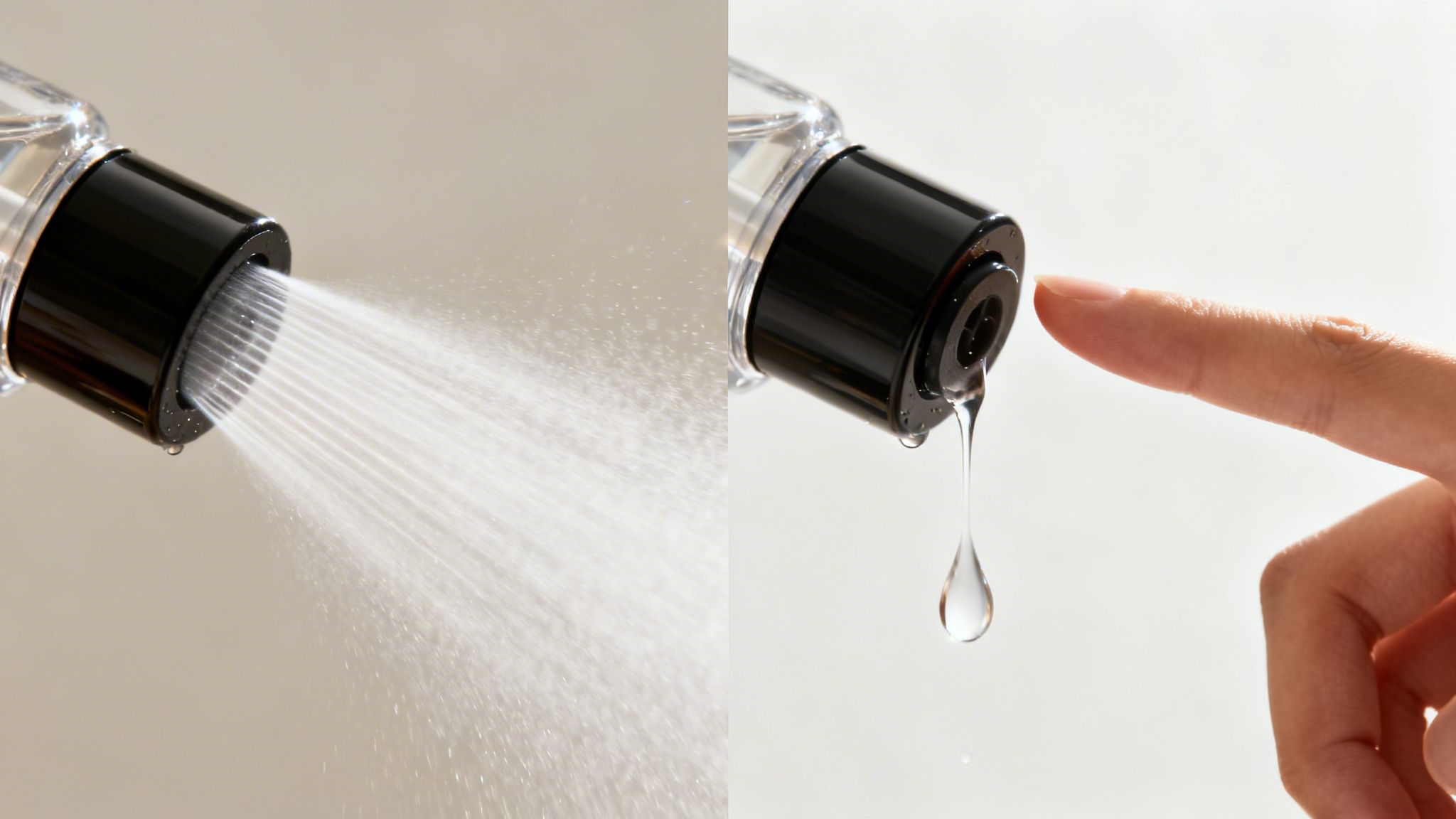
Even with the most diligent cleaning routine, you’re bound to hit a snag now and then. A rogue dripping nozzle or a weak spot in your mist line can be a real pain, especially when the North Texas heat is bearing down on your patio. We’ve seen it all in the field, from Hurst to Bedford and across the greater Fort Worth area, so let’s walk through how to fix the most common issues.
Diagnosing a Still-Dripping Nozzle
So, you’ve soaked and scrubbed a nozzle, but it’s still dripping instead of misting. What gives? A stubborn drip after a good cleaning usually points to one of two things.
Most often, it’s a deep-seated mineral deposit that your first cleaning attempt just couldn't break down completely. Try giving that nozzle another soak, maybe for a little longer this time. If that doesn't do the trick, it’s possible a tiny piece of debris got lodged in the orifice when you were putting it back in.
If a second deep clean still doesn’t fix it, the nozzle itself might be damaged or just plain worn out. At that point, your best bet is a quick replacement to get that perfect flash-evaporation mist back.
What to Do with a Stuck Nozzle
Every once in a while, you’ll find a nozzle that just refuses to budge. This is almost always caused by mineral buildup that has effectively "welded" the threads to the mist line. The key here is patience, not brute force.
Start by dabbing a bit of your vinegar solution right onto the threads where the nozzle meets the line. Let it sit for 15-20 minutes; this gives the acid time to work its magic and start dissolving those minerals. Then, get a properly sized wrench and apply slow, firm, and steady pressure. Don't use jerky motions—that’s a great way to strip the soft brass and create a much bigger headache.
Remember, the goal is to work smarter, not harder. A little dissolving power from your cleaning solution can save you from a costly mistake. Trying to force a stuck nozzle is a recipe for damaging the mist line itself, which is a much bigger problem to solve.
Solving Weak Mist in One Area
Notice one section of your mist line is barely putting out a spray while the rest is working perfectly? This is a classic sign of a localized blockage. Your first move should be to check the nozzles in that weak spot, as they’re the most likely culprits.
But what if you clean those specific nozzles and the problem persists? The issue might be further up the line. A stray piece of sediment can get stuck inside the tubing, restricting flow to everything downstream. This is a more complex fix that might require a professional line flush to fully clear out.
It's no surprise that maintenance is key. The global spray nozzle market is projected to explode from USD 2,234.40 million in 2026 to USD 4,155.10 million by 2034, and a big reason is that people are realizing how essential this tech is. But studies also show system efficiency can plummet by up to 40% without proper care for hard water buildup—a major issue all across Texas. You can dig into more about the growth of the spray nozzle industry and its impact on maintenance needs here.
A Proactive Maintenance Schedule for DFW Summers
Honestly, the best way to troubleshoot is to make sure you never have to. For the punishing climate across the DFW Metroplex, from Arlington to Grapevine, a proactive schedule is your best defense.
- Spring Startup (March/April): Before the real heat rolls in, give every nozzle a full cleaning and inspect the entire system. This is also the perfect time to check and replace your filters.
- Mid-Summer Check-In (July): This is peak season. Give your nozzles a quick visual inspection. If you see any dripping or uneven spray, a quick spot-clean of the offenders will keep your system at peak performance through the hottest days.
- End-of-Season Winterization (October/November): This is the single most important maintenance you'll do all year. Perform one last, thorough cleaning of all nozzles and completely flush the system before shutting it down. This prevents stagnant water and mineral deposits from hardening and causing real damage over the winter.
When to Call the Pros for Your Misting System
While knowing how to clean your own nozzles is a great skill to have, sometimes a simple soak-and-scrub just isn't enough. Knowing when to put the tools down and call for professional backup is key to protecting your investment and ensuring the long-term health of your high-pressure system, especially in North Richland Hills and the surrounding Tarrant County cities.
Maybe you’ve cleaned every single nozzle, but the pressure across the line is still disappointingly low. That usually points to a bigger issue lurking behind the scenes—it could be a failing pump seal or even a tiny, hidden leak in the misting line itself. These are problems that require specialized diagnostic tools and a seasoned technician to fix correctly.
And if you suspect any kind of damage to the high-pressure pump or the lines tucked away inside your patio’s structure, it’s definitely time to call us. Trying to fix these high-pressure components without the right training can quickly turn a small problem into a very expensive one, especially with systems that are integrated into your home's architecture.
The Ultimate Peace of Mind Solution
For busy homeowners and commercial managers across the DFW area, from Arlington to Keller, keeping up with seasonal maintenance can feel like just one more chore on a never-ending to-do list. That’s exactly why we created the JetStream Annual Service Program. It’s the ultimate hands-off solution to guarantee your system is always ready to take on that brutal North Texas heat.
This program is more than a convenience—it's a smart investment in your property. The global misting systems market is on track to hit USD 1.765 billion by 2034, spurred by a massive 28% jump in North American commercial installations since 2020. For these high-demand systems, professional service is essential—clean nozzles alone are proven to reduce failure rates by 35% and slash repair costs by 18%. You can explore more insights on the growing misting systems market on businessresearchinsights.com.
Our annual service program is designed to take every bit of worry off your plate. We handle the dirty work so you can simply enjoy a perfectly cool patio, whether you’re entertaining in your Colleyville backyard or serving guests on a bustling Fort Worth restaurant patio.
What Our Annual Service Program Includes
When you join our program, our expert technicians take care of your system's entire yearly maintenance cycle. You never have to remember when it’s time to winterize or wonder if your system is ready for spring. We manage it all for you.
Here’s what you can expect:
- Professional Line Flushing: We don't just clean the nozzles. We use professional-grade solutions and equipment to flush the entire system, blasting away the mineral buildup that a simple cleaning can't touch.
- Complete System Inspection: Our team gives every single component a thorough once-over. We check the pump, filters, and each nozzle to spot potential issues before they can turn into major failures.
- Full System Winterization: Before the first freeze, we’ll properly drain, depressurize, and prep your system to handle the unpredictable Texas winter, protecting your investment from freeze damage.
- Spring Startup: As soon as the weather warms up, we’ll be back to bring your system online, making sure it’s running at peak performance for that first hot day of the year.
Common Questions We Hear About Misting Nozzles
Our technicians get a lot of the same great questions from customers all over the DFW Metroplex. Whether we're out on a service call in Hurst, installing a new system in Bedford, or winterizing a patio in Euless, these topics always seem to come up. So, we've put together some quick, straightforward answers to help you keep your patio misting system running perfectly.
How Often Should I Clean My Misting Nozzles in North Texas?
To get the best performance out of your system during our brutal DFW summers, you'll want to inspect and clean your nozzles at least twice a season.
We recommend a cleaning right at the beginning of spring to get the system ready for the heat. Then, a second cleaning mid-summer, usually around July, keeps everything at peak performance when you need it most.
And don't forget the end of the season! A full cleaning and system flush is a critical part of winterization. This simple step prevents that mineral-rich water from sitting and hardening in the lines all winter long.
Can I Use CLR or Another Harsh Chemical?
We get this question a lot, and we strongly recommend against using harsh chemicals like CLR. While they seem like a quick fix, they can be far too aggressive for the precision-engineered brass or stainless steel parts in high-pressure nozzles.
Over time, these chemicals can actually eat away at the nozzle orifices. This permanently ruins the spray pattern and kills your system's cooling power.
A simple mix of one part white vinegar to one part water is much safer and works wonders on the specific mineral deposits we see in our Tarrant County water. It's the exact method we recommend for any DIY cleaning.
What’s the Difference Between a Clogged and a Broken Nozzle?
It's a common question we hear from homeowners from North Richland Hills to Colleyville. A clogged nozzle is usually the culprit if you see dripping, an uneven "jet" of water instead of a fine mist, or no water at all. The good news is that a thorough cleaning can almost always fix this.
A broken nozzle, on the other hand, might have visible damage. A classic sign is a nozzle that constantly leaks from its threads, even after you've made sure it's tight and the o-ring is in place. If a nozzle still isn't working right after you’ve tried deep cleaning it twice, it’s probably time for a replacement.
Why Is My Pressure Low After Cleaning the Nozzles?
Low pressure right after a cleaning is frustrating, but it's almost always a simple fix. Before you panic, just walk the line and double-check that every single nozzle is screwed in tight. Even one loose nozzle can cause a major pressure drop for the whole system.
If the nozzles are all secure, the next place to look is a clogged inline water filter, a small air leak somewhere in the line, or an issue with the pump itself. Regular maintenance is key to keeping everything efficient; if you're curious about how much water a well-maintained system uses, you might find our article on mister water consumption interesting.
Ready to take the hassle out of maintenance? Let the pros at JetStream Outdoor Cooling & Heating handle everything with our comprehensive annual service program. Contact us today for a free quote.