
As a restaurant owner in Fort Worth, TX, you know the feeling. That beautiful patio is your biggest asset—until the first North Texas cold front rolls through. Suddenly, half your seating is a ghost town, and you're watching potential revenue walk out the door. A professional restaurant heater outdoor system changes that equation for businesses across the DFW area, turning an unpredictable space into a reliable, year-round profit machine, even on the chilliest nights. For restaurants from Arlington to Bedford, extending the patio season is critical for maximizing revenue.
Turning Your Fort Worth Patio into a Year-Round Profit Center
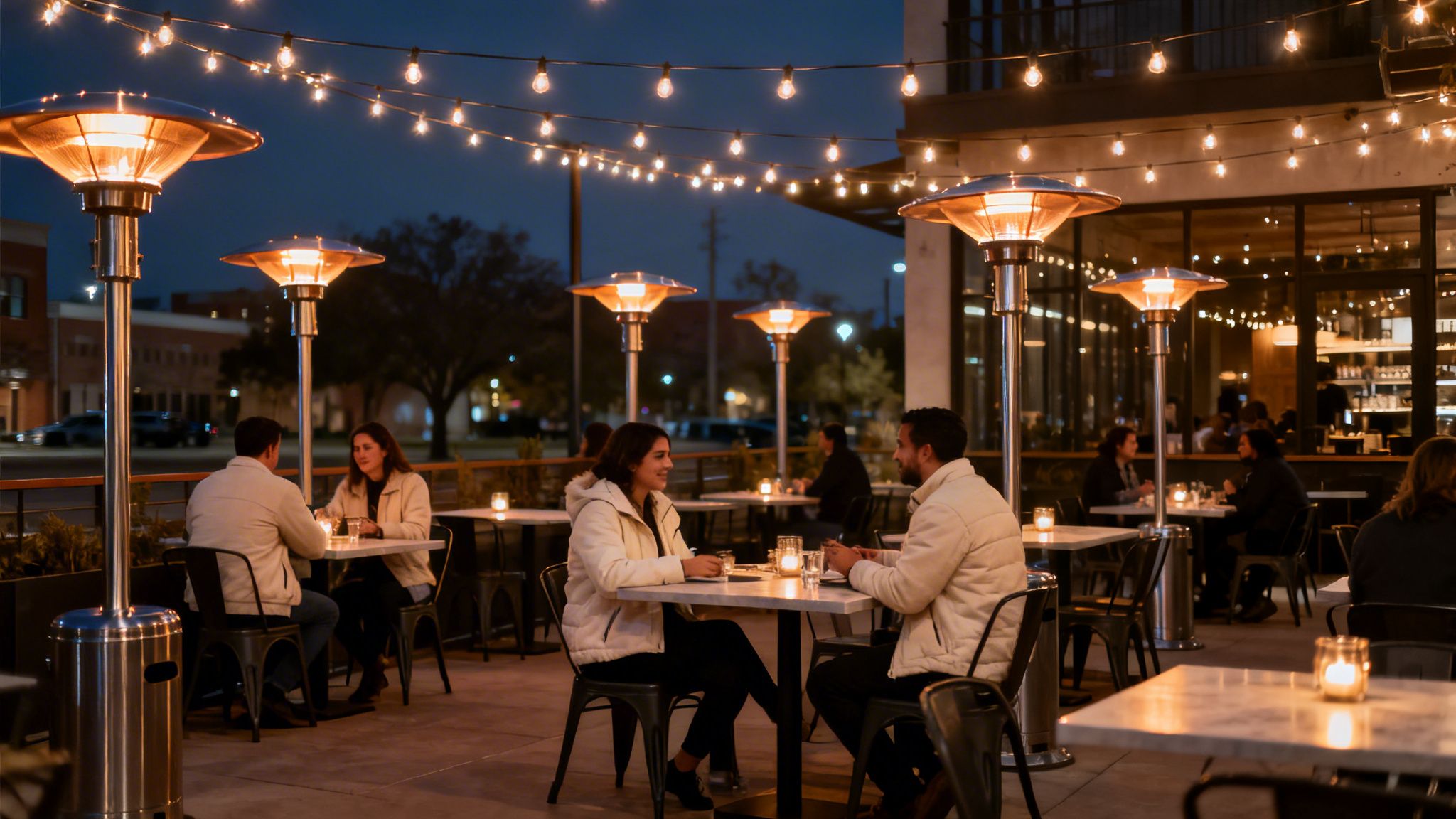
The math is painfully simple for any DFW restaurant operator: an empty patio makes zero money. When the temperature drops, all those valuable tables are instantly out of commission, shrinking your capacity and killing your nightly turns. It’s a direct hit to your bottom line, especially if you’re in a competitive Tarrant County dining hub from Arlington to Grapevine.
Think of it this way: investing in a professional outdoor heating system isn't an expense. It's a direct investment in your seating capacity and your service season, turning a seasonal headache into a four-season asset.
This isn’t just a local trend. Restaurants and bars across the country are catching on, realizing that a heated patio is essential for maximizing revenue. In fact, adding the right heating system can boost your usable seating by as much as 22% on any given night, which translates directly to higher turnover and healthier profits.
The Business Case for Heated Patios in the Mid-Cities
For restaurants scattered across the Mid-Cities—from Bedford and Euless to North Richland Hills and Colleyville—a heated patio is more than just a comfort feature. It’s a serious competitive advantage. When a cold snap hits, where do you think guests are going to look for reservations? They’ll actively seek out the places with warm, comfortable outdoor seating.
By making every seat on your patio viable regardless of the temperature, you're not just serving more customers—you're building a reputation as a year-round destination.
This kind of reliability brings in more reservations, lets you accommodate larger parties without a hitch, and encourages guests to stick around for that extra round of drinks or dessert.
Across the DFW Metroplex, restaurant owners face similar weather-related challenges that directly impact their operations and profitability. A professionally installed outdoor heating system offers a powerful solution to these common problems.
Outdoor Heater Impact on Fort Worth Restaurant Operations
| Common North Texas Challenge | How Outdoor Heaters Provide a Solution | Key Benefit for Your Restaurant |
|---|---|---|
| Sudden cold fronts emptying patios | Creates a consistently warm and comfortable environment, keeping seats full. | Prevents lost revenue from unpredictable weather. |
| Shorter patio season (Nov-Mar) | Allows you to keep the patio open and profitable through fall, winter, and early spring. | Maximizes your physical space and extends your peak season. |
| Intense competition in dining hubs | Offers a desirable amenity that makes your restaurant stand out. | Attracts more guests and builds customer loyalty. |
| Inability to host large parties outdoors | Makes your entire patio usable, accommodating bigger groups any time of year. | Increases average check size and nightly turnover. |
Ultimately, the goal is to transform your patio from a seasonal gamble into a core, dependable part of your business strategy.
Key Benefits of a Professional Outdoor Heating System
A well-designed heating system brings immediate operational wins that any savvy restaurant manager in Keller or greater Tarrant County can appreciate.
- Extended Dining Season: Instead of shutting down your patio from November to March, you can keep it packed and profitable, capturing revenue during months that used to be a write-off.
- Increased Seating Capacity: On any cool evening, you’re operating at 100% capacity, turning tables that would otherwise be collecting dust.
- Enhanced Guest Experience: A comfortably warm patio creates a cozy, inviting atmosphere that people remember. It’s the kind of thing that boosts satisfaction and brings them back again and again.
- Strong Return on Investment: Many of our DFW clients find that their heating systems pay for themselves within the first one or two seasons. You can explore our specific commercial outdoor heating solutions and see how they deliver these exact results.
At the end of the day, a professional restaurant heater outdoor installation moves your patio from a weather-dependent variable to a cornerstone of your business.
Finding the Right Heating Solution for Your Restaurant's Patio
Before you even start shopping for heaters, the single most important thing you can do is take a good, hard look at your outdoor space. For restaurant owners in Fort Worth, Arlington, and across the Mid-Cities, picking the perfect restaurant heater outdoor system isn't about buying the most powerful unit—it's about understanding what your specific patio needs to thrive.
Take a walk through your patio, but see it with fresh eyes. Don't picture it on a beautiful 75-degree afternoon. Instead, imagine it on a chilly, 45-degree evening in November with a breeze picking up. Getting this right from the start means honestly evaluating everything from your patio's layout to how it stands up to that unpredictable North Texas weather.
Start With Your Patio's Structure
First things first, what kind of space are we working with? A cozy, enclosed patio in Keller has completely different heating needs than a wide-open beer garden in Euless.
- Covered Patios: If you have a solid roof, you're already ahead of the game. These spaces trap heat naturally, making them perfect for ceiling-mounted electric or gas heaters that deliver consistent, even warmth.
- Partially Covered Patios: Think pergolas or similar open-rafter structures. You can still mount heaters, but you'll lose a lot of warmth. This is where placement becomes everything—you have to aim the heat right where your customers are sitting.
- Open-Air Patios: These are the toughest to heat. Forget traditional heaters that warm the air; that warm air will just blow away. Here, radiant infrared heaters are your best friend because they heat people and objects directly, not the empty space around them.
Don't forget to look up. The height of your ceiling or awning is a massive factor. A patio in North Richland Hills with a low, 8-foot ceiling needs a totally different approach than a grand entrance in Grapevine with 16-foot ceilings. Mount heaters too low, and your guests will feel like they’re being cooked. Mount them too high, and they won't feel a thing.
We see this mistake all the time: a restaurant buys a powerful heater but mounts it at the wrong height. An overpowered heater mounted too low creates an uncomfortable hot spot, while a great heater mounted too high is basically useless.
Take Stock of Your Utilities
Your access to gas and electric will immediately narrow down your choices. Before you get your heart set on a specific type of heater, you have to know what your building can actually support.
Do you have gas lines or dedicated electrical circuits already running near your patio?
If your Colleyville restaurant already uses natural gas in the kitchen, extending that line out to the patio can be a smart, cost-effective move. But if you don't have a gas line nearby, the cost of trenching and running a new one can be a major, often unexpected, expense.
The same goes for electricity. Pop open your electrical panel. Do you have enough open circuits to handle several commercial-grade electric heaters? If that panel is already full, you’ll need to budget for an electrical upgrade. A professional assessment can spot these "hidden" costs upfront, so you aren't hit with a nasty surprise mid-project.
Factor in Wind, Weather, and Cold Spots
Every patio has its own little microclimate. On the next windy day, take note of where the drafts are. Is there one corner that always seems to get a nasty cross-breeze? Those are your problem areas. Strategically placed planters, decorative screens, or even retractable vinyl panels can act as windbreaks, making any heating system you install far more effective.
Think about your table layout, too. You know which tables are your "money tables"—the ones with the best view that are always full. Prioritize making them comfortable first. Then, look at those C-list tables that stay empty on cooler nights. With the right heating plan, you can turn those undesirable seats into prime real estate and maximize your revenue all year long.
Comparing Outdoor Heater Types For Your DFW Patio
Now that you've sized up your patio's unique needs, it's time to get into the hardware. Choosing the right restaurant heater outdoor system in the DFW metroplex comes down to a balancing act between performance, aesthetics, and your budget. The three main players are electric infrared, natural gas, and propane. Each brings something different to the table for your operation, whether you're in Bedford, Euless, or Colleyville.
Let’s dig into which type really shines in different Tarrant County settings. An upscale, covered dining spot in North Richland Hills has completely different needs than a sprawling, open-air beer garden in Arlington. The best fit truly hinges on your specific space and business goals.
Electric Infrared Heaters
Electric infrared heaters are the modern go-to, especially for restaurants that care about a clean look and efficient, targeted comfort. Instead of trying to heat the air—which a classic North Texas wind will just laugh at and blow away—these units emit radiant warmth. This heat warms people and objects directly, a lot like how the sun feels on your skin.
It’s an incredibly effective approach for both fully covered and wide-open patios.
Here’s why we see so many restaurants making the switch:
- Targeted Warmth: The heat goes exactly where you want it: on your guests. This cuts down on wasted energy.
- Aesthetic Integration: Many models can be mounted flush with the ceiling or even completely concealed, so they don't mess with your restaurant's design.
- Low Maintenance: Seriously low. There are no moving parts to break and no fuel to refill.
- Silent Operation: They create warmth without a sound, so they won't interrupt conversations and kill the vibe.
This little decision tree can help you see which path makes the most sense based on your patio's structure and what utilities you have on-site.
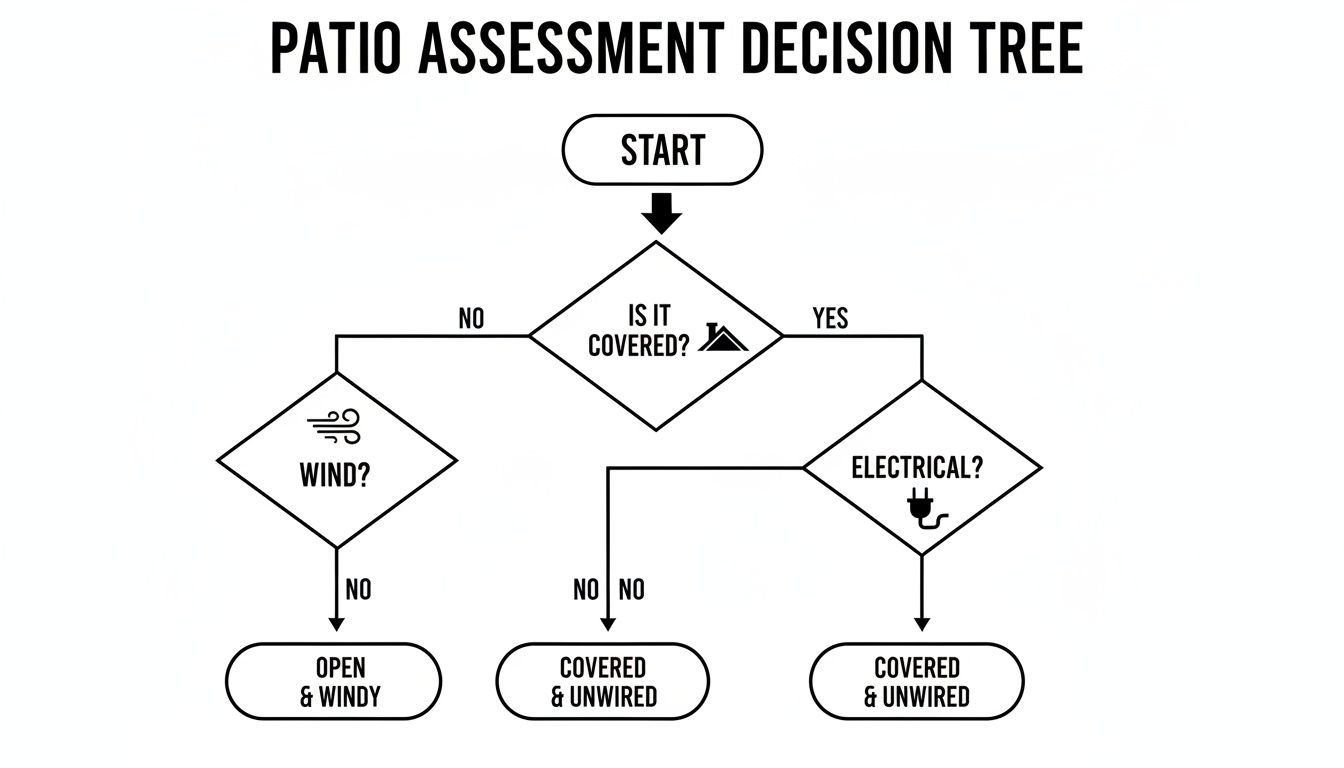
As you can see, if you have a roof and power handy, a concealed infrared system is a fantastic choice. Even for open, windy patios, their ability to heat people directly makes them a winner.
The one thing to plan for is electrical capacity. You might need an electrician to make sure you have enough juice, which can be an upfront cost. But over the long haul, their efficiency and low running costs often make them the smartest financial move.
Natural Gas Heaters
If you're running a high-volume spot with a massive patio, natural gas heaters are absolute workhorses. For restaurants in places like Grapevine or Keller that already have a natural gas line, tapping into it can be a very cost-effective way to fuel a powerful heating system that just won't quit.
Natural gas is all about raw power. These systems pump out a huge amount of BTUs, making them perfect for keeping large, busy patios comfortable all night long without ever worrying about running out of fuel mid-service.
Their biggest draws are the low cost of the fuel itself and their sheer heat output. Once installed, natural gas is way cheaper than propane, and you'll never have a manager frantically swapping tanks during a Saturday night rush. The trade-off is a more involved installation. You'll need a professional to run the gas lines and ensure every connection is perfectly up to code, so the initial investment is higher.
Propane Heaters
When most people think "patio heater," they picture the classic, mushroom-style propane units. Let's be honest, their biggest selling point is flexibility. They're self-contained, so you can wheel them around to hit a cold spot or rearrange things for a private party.
That portability makes them a decent entry-level choice, but for a busy restaurant, the day-to-day reality can be a huge headache.
- High Operating Costs: Propane is the most expensive way to heat your patio, period.
- Labor Intensive: Your staff will be stuck monitoring fuel levels and lugging heavy tanks around—usually at the worst possible time.
- Aesthetic Intrusion: Those big units take up valuable floor space that could be used for another two-top, and they can really disrupt the flow and look of your patio.
When you're looking at fuel, understanding the logistics and cost is everything. A quick look at a comparison like Propane vs CNG makes it obvious why permanent, piped-in solutions are usually better for a business. For most established restaurants in DFW, the constant hassle of propane just isn't worth it compared to a properly integrated electric or natural gas system.
The market is already voting with its wallet. The patio heater market is growing, and it's being pushed by energy-efficient models. Infrared technology now makes up over 36% of sales, and here in Texas—which accounts for 55% of all U.S. installations—the shift toward efficient, flameless heating is happening fast.
To help you weigh your options at a glance, we've put together a quick comparison table for the DFW market.
Electric vs Gas vs Propane Heater Comparison for DFW Restaurants
| Heater Type | Upfront Cost | Operating Cost | Best For | Key Consideration in North Texas |
|---|---|---|---|---|
| Electric Infrared | Moderate to High | Low | Covered patios, design-focused spaces, and windy areas where targeted heat is needed. | Very effective against wind, but requires adequate electrical service. Great for a "set it and forget it" solution. |
| Natural Gas | High | Low | Large, high-volume, open-air patios where maximum heat output is the priority. | Requires existing natural gas line and professional installation, but offers the cheapest fuel cost for big spaces. |
| Propane | Low | High | Small patios, businesses needing flexibility, or as a temporary/starter solution. | The constant need to swap tanks is a major operational drain, and they take up valuable floor space. |
Ultimately, the right choice is the one that fits your space, your brand, and your long-term operational plans.
Strategic Heater Placement for Maximum Guest Comfort
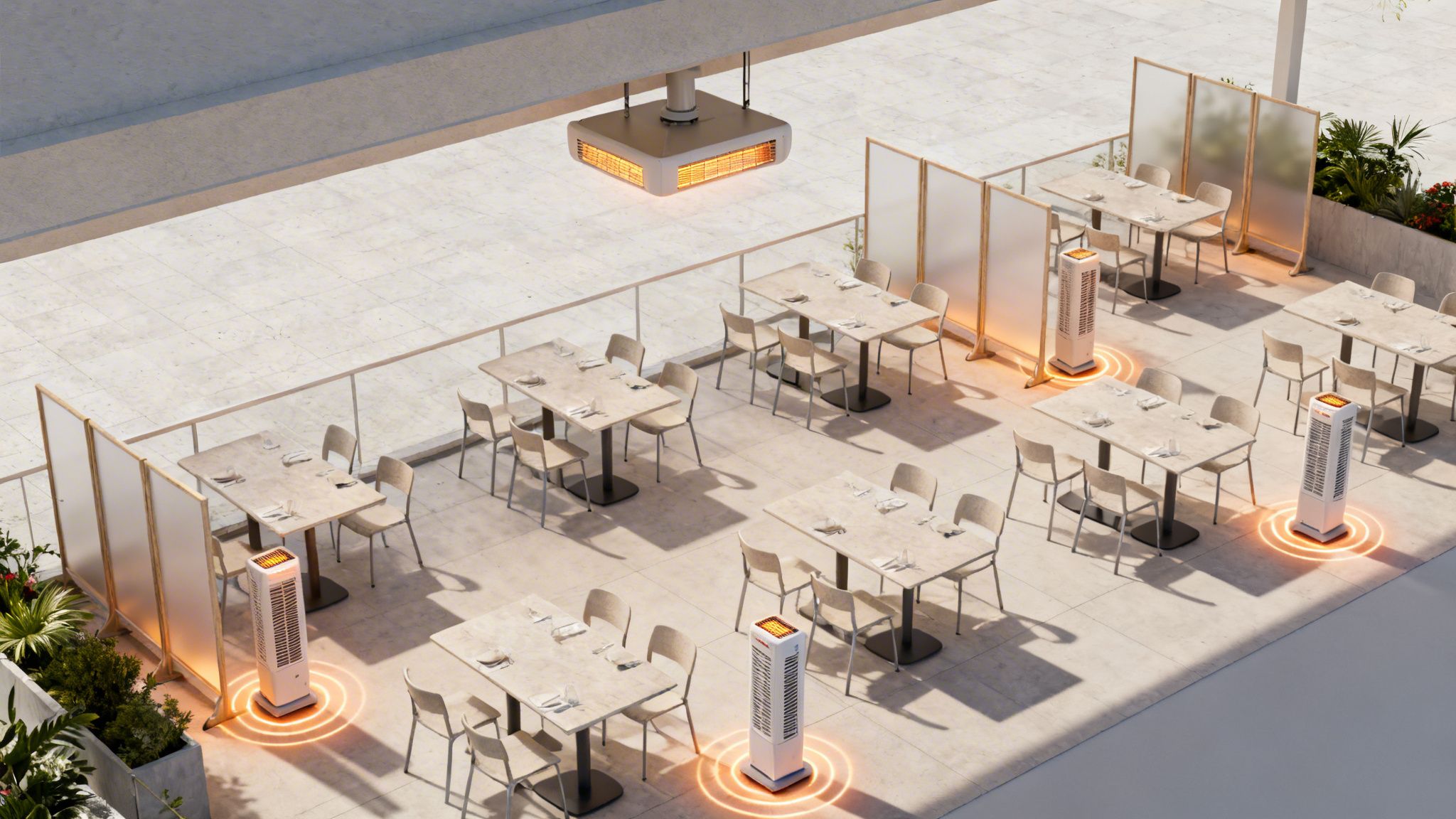
You can pick the best restaurant heater outdoor system on the market, but the real magic is in the layout. Where you place those units is what separates a comfortable, money-making Tarrant County patio from one with miserable hot spots and chilly gaps.
The goal isn't just to blast heat into the space. It’s about creating an inviting, evenly warmed environment where every seat is the best in the house. This takes a bit of planning, whether you’re running a bustling patio in Hurst or a quiet courtyard in Colleyville. Without a solid plan, you’ll just make some guests sweat while others shiver.
Designing a Zoned Heating Layout
I see this mistake all the time: owners trying to heat a whole patio with one or two giant heaters. A much smarter approach is creating balanced heat zones with several smaller, well-placed units.
Think of your patio in sections—the main dining tables, bar seating, a lounge area, maybe a waiting station. Each spot has its own unique heating needs.
By zoning your heat, you get incredible control. You can aim warmth right where your guests are, instead of wasting money and energy heating empty walkways or service stations. It's a game-changer for Mid-Cities patios with those tricky, varied layouts.
On a partially covered patio in Bedford, for instance, we might install ceiling-mounted infrared units over the dining tables. Then, we could add wall-mounted heaters to warm up a long bar rail along the edge. This layering creates overlapping fields of warmth that get rid of those cold spots between tables.
The best-heated patios feel effortlessly comfortable. Guests shouldn't even notice the heaters; they should just feel a seamless, pleasant warmth that makes them forget it’s cold outside. A zoned layout is how you get there.
This strategy also gives you a defense against those notorious North Texas winds. When you have overlapping heat zones, you build in some redundancy. If a gust hits one side of the patio, the heaters in the next zone help pick up the slack, keeping things comfortable for everyone.
Mastering Mounting Heights and Angles
The position of each heater is just as important as the overall layout. I've been called in to fix plenty of premium systems that weren't working simply because they were mounted incorrectly.
Mounting Height: The manufacturer’s guide is your starting point, but every patio is different. For a covered space in Euless with 10-foot ceilings, flush-mounted infrared heaters are perfect. But for a pergola in Grapevine with 14-foot ceilings, you'll likely need dropdown poles or angled brackets to bring that heat source closer to your customers.
Mounting Angle: Heaters should be angled to throw warmth across the seating area, not straight down on people’s heads. A 30 to 45-degree angle is usually the sweet spot. This casts a wider, more gentle blanket of heat and avoids that uncomfortable "hot head" feeling.
A professional installer will calculate this for you. We aim to focus the heat at the "seating plane," which is about 36 to 42 inches off the ground—right where your guests are sitting. When the warmth hits their bodies and tables, you’ve created a truly comfortable experience. Getting this right is what turns a piece of hardware into a real revenue-driver for your restaurant.
Navigating Installation Codes and Safety in Tarrant County
When you're installing a commercial restaurant heater outdoor system, getting it done by a professional isn't just a suggestion—it’s absolutely essential for safety, compliance, and frankly, protecting your business. If your restaurant is in Fort Worth, Arlington, or anywhere in the Mid-Cities, the maze of local codes can feel like a headache. But it's a part of the process you can't afford to get wrong.
Every city, from Bedford to North Richland Hills, has its own specific set of building codes and fire regulations for both gas and electric heaters. This is exactly why you bring in a licensed pro who works in Tarrant County every day. They know the permit process inside and out and make sure every connection, every mount, and every clearance is by the book.
Adhering to Local and National Fire Codes
The single most critical part of any heater installation is respecting the required safety clearances. Every heater has a minimum required distance it must be from any combustible materials. No exceptions.
This includes things you might not even think about:
- Awnings, umbrellas, and other fabric
- Wood beams, pergolas, and decorative trellises
- Both real and artificial plants or greenery
- Walls and ceilings
A true professional will measure these clearances down to the inch, eliminating fire hazards and making sure you’ll fly through your inspection. For gas heaters, this also means they'll meticulously leak-test every single line. With electric systems, they’ll confirm the wiring is correctly rated and shielded from the weather.
Essential Safety Features and Professional Oversight
Today’s commercial heaters are packed with safety tech. You’ll see features like automatic tip-over switches on portable models and overheat sensors on mounted heaters. But those features are only as good as the installation itself.
A professional job in Euless or Colleyville is more than just hanging a heater. It's a complete assessment. They'll check if your electrical panel can handle the new load or if your gas lines provide adequate pressure. It’s this kind of proactive thinking that prevents system failures and keeps your customers and staff safe from the get-go.
The biggest mistake we see restaurant owners make is trying to install a commercial system themselves or hiring a general handyman. An improper installation can lead to catastrophic failure, void your insurance, and become a massive liability for your business.
This isn't just about following rules; it's about smart business. The global outdoor heating market is expected to hit USD 1,067.24 million by 2035, and restaurants make up 29% of that demand. Here in the U.S., which accounts for 34% of the global market, Texas is a leader in adopting these systems. We’ve seen restaurants extend their patio season by an average of 22% in the colder months, turning a safe, compliant installation directly into revenue.
At the end of the day, a professionally installed and inspected system lets you sleep at night. You know your investment is safe, compliant, and ready to make you money for years to come in your Grapevine or Keller restaurant.
Your Top Questions About Restaurant Patio Heaters
Even with a solid plan, investing in a professional restaurant heater outdoor system brings up some real-world questions. We get it. You're making a big move for your business, and you need straight answers. We've fielded countless calls from restaurant owners across Fort Worth, Arlington, and the Mid-Cities, so we’ve put together the most common questions we hear.
This isn't about getting bogged down in technical specs. It's about what this investment means for your daily operations and, most importantly, your bottom line.
What’s the Real ROI on Professional Outdoor Heaters for My DFW Patio?
This is always the first question, and for good reason. The answer for DFW-area restaurants is incredibly positive. Your return on investment comes from two key places: stretching your patio season deep into the North Texas fall and winter, and making sure every single table is usable on any given chilly night.
Think about it. That 15-table patio in North Richland Hills that’s usually a ghost town from November to March? With the right heating system, it’s suddenly alive and generating revenue on those nights. You’re turning an unpredictable space into a reliable profit center. In our experience, most of our clients in Fort Worth and the surrounding Mid-Cities see their heating systems pay for themselves within just one or two seasons.
By making your patio usable for an estimated 22% more of the year, you're doing more than adding a few extra nights of service. You're fundamentally boosting your annual sales and turning a seasonal headache into a year-round asset.
Are Concealed Infrared Heaters Really Powerful Enough for an Open-Air Patio in Keller?
Absolutely. In fact, for an open-air space, they’re often the only smart choice. The difference is in how they heat. Old-school heaters just warm up the air, which is a losing game on a windy night in Keller or Grapevine. All that expensive heat just blows away.
Infrared heaters work differently. They use radiant heat to warm solid objects directly—your tables, your chairs, and most importantly, your paying guests. It’s the same way the sun warms you. This type of warmth is incredibly effective, even with a breeze, because it’s not wasted on heating empty air.
For an open-air patio in DFW, the secret isn't one or two massive heaters. It's a professionally designed layout. We use multiple concealed units to create overlapping zones of warmth, making sure there are no cold spots and every single table is comfortable. It's all about a strategic design tailored to your specific patio.
How Much Maintenance Do Commercial Patio Heaters Actually Need?
The maintenance really comes down to the type of system you go with. Each one has its own to-do list.
- Propane Heaters: These require the most hands-on effort. You're constantly checking fuel levels and dealing with the hassle of swapping out heavy tanks.
- Natural Gas Heaters: A huge step up from propane, but they absolutely need an annual professional check-up to ensure every line and connection is safe and working perfectly.
- Electric Infrared Heaters: These are the champs of low maintenance. With no moving parts to fail and no fuel to worry about, they just need a quick cleaning every so often to keep dust off.
Here at JetStream, we handle this for our clients all over Tarrant County. Our exclusive annual service program covers a full inspection, system cleaning, and a pre-season startup check. We make sure your heaters are ready to go before the first cold front even hints at rolling in, so you never miss a beat.
Will Installing Heaters Ruin My Restaurant's Atmosphere?
This is a huge concern, especially for restaurants that have invested heavily in their design in places like Colleyville or Southlake. The short answer is no—not if it's done right. The era of being stuck with those clunky, silver mushroom heaters is long gone.
Modern electric infrared heaters are built for stealth. They can be mounted flush to the ceiling, tucked into architectural elements, or completely concealed from view. We can even have them painted to perfectly match your decor. Your guests will never see them; they'll just feel that perfect, comfortable warmth. You get to keep the exact ambiance you worked so hard to create.
When integrated correctly, heaters don't detract from the atmosphere—they enhance it. They make your patio feel more thoughtful and inviting on a cool evening, which is the kind of detail that keeps guests comfortable and encourages them to stay a little longer.
Ready to turn your seasonal patio into a year-round revenue generator? JetStream Outdoor Cooling & Heating specializes in designing and installing custom heating solutions for restaurants across the DFW Metroplex, from our hub in Hurst to service areas including Fort Worth, Arlington, Bedford, and Euless. From concealed infrared systems to powerful natural gas setups, we create comfortable, profitable outdoor spaces. Get a free ballpark estimate for your project and let's get started.