
Anyone who's tried to enjoy a perfect North Texas evening knows the story: a beautiful day turns into a chilly night, sending everyone indoors. If you're searching for the best outdoor electric lamp heaters in Euless, TX, you already know the struggle to keep a patio comfortable year-round is real, whether you're in nearby Bedford, Hurst, or anywhere in the Mid-Cities. Across the DFW Metroplex, homeowners and businesses rely on professional heating systems to make outdoor spaces enjoyable when the temperature drops.
Electric heaters are an incredible solution, offering a blend of efficiency, style, and immediate warmth that’s a perfect fit for Texas backyard living.
Why Electric Heaters Are a Smart Choice for Euless Patios
You’ve probably faced the classic DFW dilemma. The weather is gorgeous, but as soon as the sun dips below the horizon, so does the temperature, cutting your outdoor gathering short. This is exactly where outdoor electric lamp heaters become a game-changer for Tarrant County homes and restaurants.
Unlike those clunky, old-school propane heaters, modern electric models offer a far more convenient and effective way to heat your space. For homeowners in Euless, North Richland Hills, and Colleyville, the benefits are obvious—you get instant, targeted heat without ever having to worry about refilling a propane tank or dealing with a live flame.
The Problem with Traditional Gas Heaters
Take a look at most patios across the DFW Metroplex, and you’ll likely spot one of those mushroom-style propane heaters. They’ve been around for a while, but they come with some serious downsides.
- They’re Incredibly Inefficient: Gas heaters work by heating the air around them. On a breezy North Texas evening, that warm air simply blows away, taking your money and energy with it.
- The Refueling is a Hassle: They run on 20 lb propane tanks that always seem to run out at the worst possible moment. Lugging them back and forth for a refill gets old fast.
- Safety is a Real Concern: Open flames and extremely hot surfaces are a risk, especially if you have children, pets, or a crowded commercial patio in Arlington or Fort Worth.
- They’re an Eyesore: Let’s be honest, those bulky units take up a lot of valuable floor space and rarely do anything to improve the look of a well-designed patio.
It's also worth noting that wind is a huge factor. Many standard gas heaters are only rated to work in winds up to 10 MPH. Their performance drops dramatically on a gusty Texas night, right when you need that warmth the most.
The Electric Advantage
Outdoor electric lamp heaters get around all these issues by using smart infrared technology. Instead of trying to warm the air, they radiate heat that directly warms people and objects in its path—just like the sun.
This makes them far more efficient and effective, especially for open-air spaces like the backyards and restaurant patios you see all over Grapevine and Keller. You feel the warmth instantly, without waiting for the air to heat up.
To make it even clearer, here’s a quick comparison of why so many people are making the switch.
Electric Lamp Heaters vs Traditional Propane Heaters
This table breaks down the key differences between modern electric lamp heaters and the propane heaters commonly found on patios across the DFW area.
| Feature | Outdoor Electric Lamp Heaters | Traditional Propane Heaters |
|---|---|---|
| Heating Method | Instant, targeted infrared radiant heat | Convection heat (warms the air) |
| Efficiency | Highly efficient; warms people directly | Low efficiency; heat easily lost to wind |
| Fuel Source | Plugs into a standard electrical outlet | Requires heavy, refillable propane tanks |
| Operating Cost | Lower long-term operational costs | Higher costs due to propane refills |
| Safety | No open flames; reduced fire risk | Open flame; potential tipping hazard |
| Convenience | Turn on/off with a switch or remote | Manual ignition; transport heavy tanks |
| Installation | Wall, ceiling, or freestanding options | Freestanding only; takes up floor space |
As you can see, the choice is pretty clear. For consistent, safe, and cost-effective warmth, electric heaters win out every time.
How Infrared Heaters Create Instant Comfort
Trying to heat the air on your patio is a losing battle, especially against that classic North Texas wind. It's why most traditional heaters just don't cut it—they warm up air that the wind immediately snatches away. Outdoor electric lamp heaters, though, work on a totally different principle. It’s a much smarter way to stay warm.
They use infrared technology to create what’s called radiant heat.
Think about standing in the sun on a cool, clear day in Tarrant County. You feel the sun’s warmth on your skin right away, even if the air itself is crisp. That direct, instant warmth is radiant heat, and it's exactly what our infrared heaters deliver. They don't waste a single watt trying to heat the air; instead, they send out waves of energy that directly warm people, furniture, and surfaces.
This is a huge advantage for open spaces like patios in Euless and Arlington. The warmth stays right where you and your guests are, making your outdoor area perfectly comfortable even on a breezy evening.
The Science of Direct Warmth
Infrared radiation is a completely natural part of the electromagnetic spectrum. It’s totally safe—in fact, it's the same kind of heat our own bodies give off. Electric heaters use specially designed emitters, or "lamps," to generate this infrared energy. It’s an incredibly efficient approach because nearly 100% of the electricity gets converted directly into heat you can actually feel.
The core benefit is simple: Infrared heaters warm objects, not air. This makes them exceptionally effective for the open-air patios common in the Mid-Cities, from Fort Worth to Grapevine, ensuring comfort without the stuffiness or wasted energy of conventional heating methods.
The concept map below shows the decision many Euless homeowners face when trying to achieve total patio comfort.
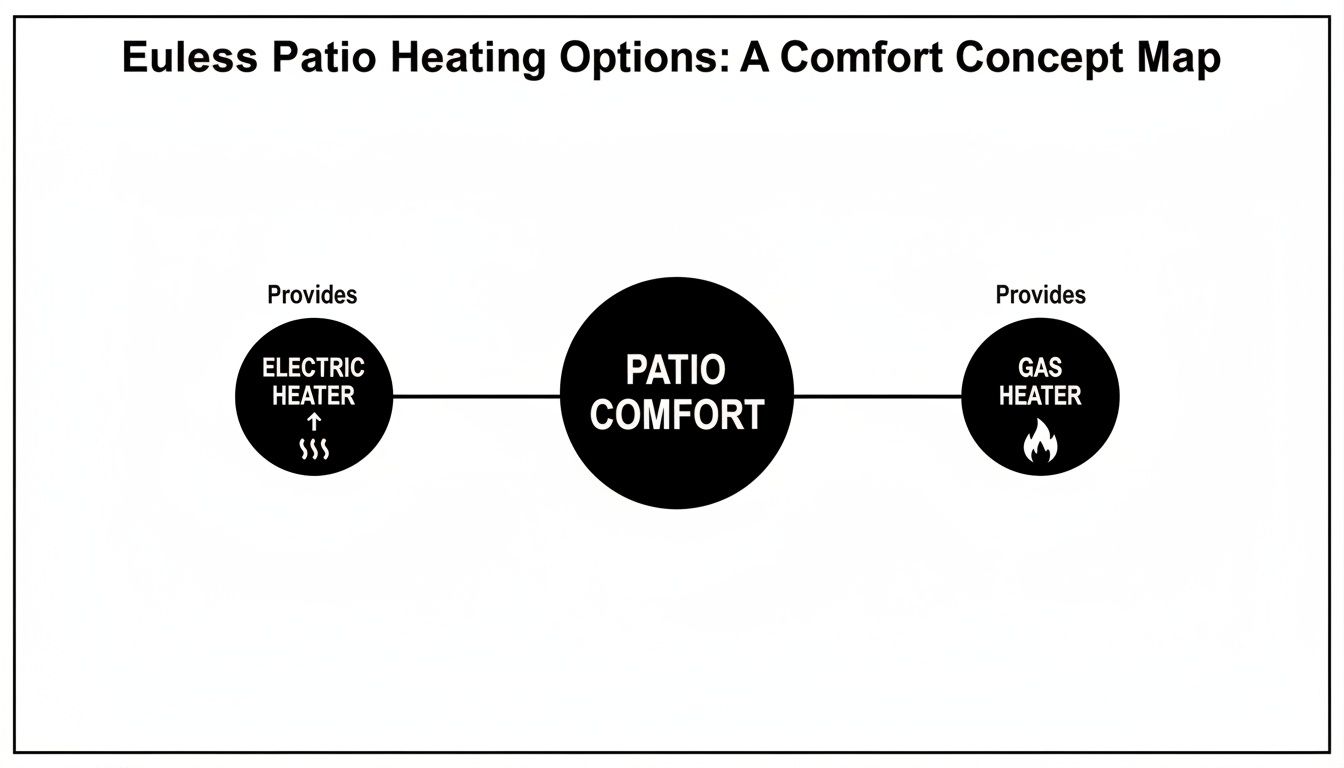
As you can see, both gas and electric heaters can provide comfort, but electric models do it with efficient, flameless radiant heat.
Different Waves for Different Needs
It turns out not all infrared heat is created equal. The technology is broken down by wavelength, and each type is suited for different kinds of spaces.
- Short-Wave (Infrared-A): This is the most powerful type, delivering intense, instant heat. It does a fantastic job of cutting through cold air and wind, which makes it perfect for open, exposed patios. These heaters often give off a visible, soft orange or red glow.
- Medium-Wave (Infrared-B): Offering a great balance of comfort and heat, medium-wave is less intense than short-wave. It produces a gentler warmth with very little visible light, making it a go-to choice for residential patios in places like Colleyville and Keller.
- Long-Wave (Infrared-C): This is the mildest form of infrared. It produces zero visible light and provides a gentle, even warmth. It's really best for enclosed or very well-sheltered outdoor spaces where wind isn’t an issue.
The market is catching on. In North America alone, the outdoor heating industry was valued at USD 164.09 million in 2020 and is projected to hit USD 248.04 million by 2032. Electric systems, in particular, are gaining ground because of their lower emissions and how easily they can be integrated into a home's design.
Knowing the difference between these radiant heat types is the first step in creating a space you can truly use all year.
Choosing the Right Heater for Your Tarrant County Patio
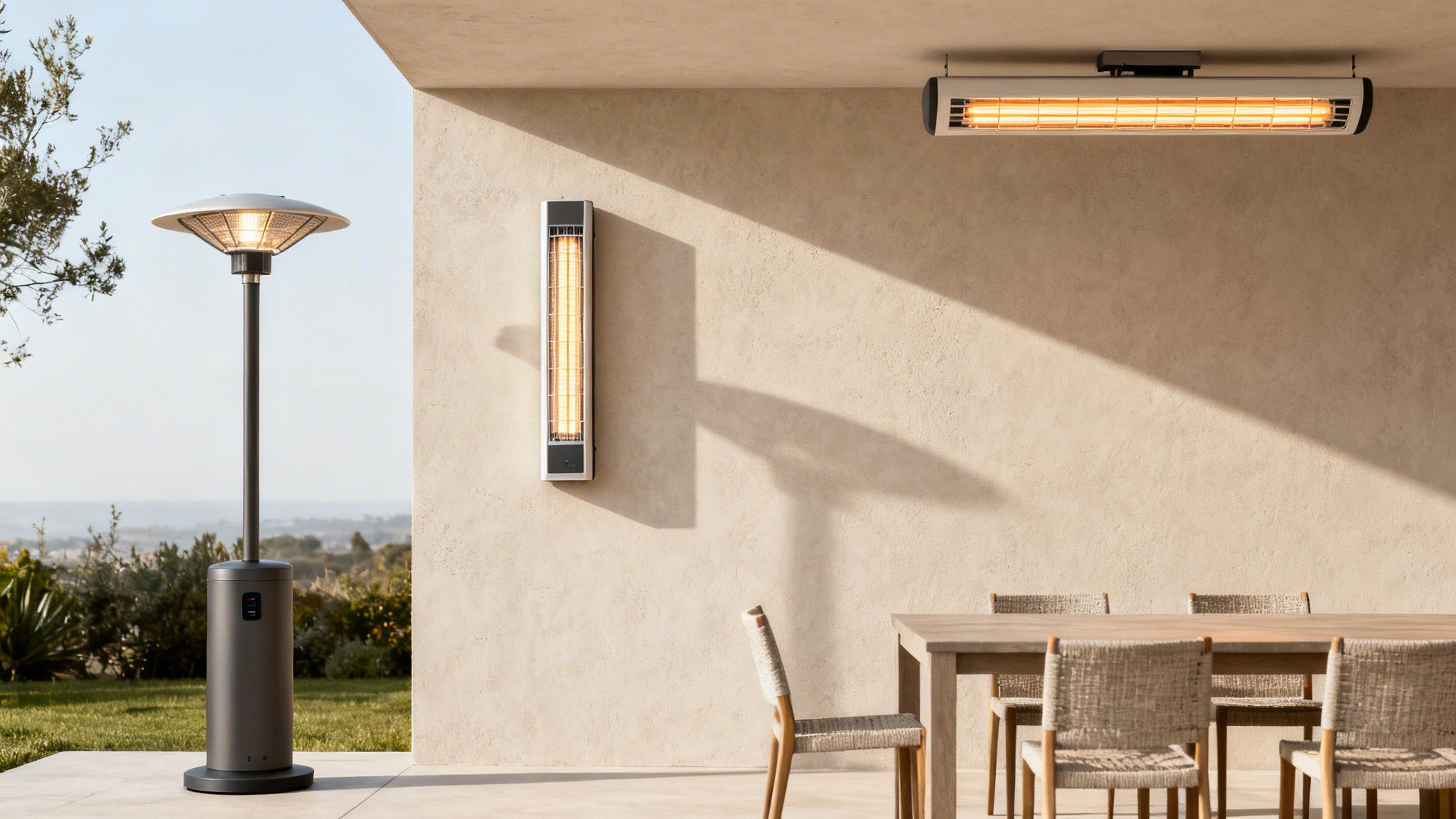
Trying to pick the perfect outdoor electric lamp heater can feel overwhelming. The truth is, there’s no single "best" option. What keeps a small Euless patio toasty won't make a dent on a sprawling restaurant deck in Fort Worth. The right choice for you comes down to your patio's size, its layout, and how you want to use the space when those North Texas evenings get a chill.
If you’re a homeowner or business in Grapevine, Keller, or North Richland Hills, this guide is for you. We'll walk you through figuring out your heating needs and comparing the common types of heaters you'll find across the Mid-Cities, so you can make a smart investment that actually improves your outdoor living.
Sizing Your Heater for DFW Weather
First things first, we need to talk about power. A heater's output is measured in watts (W)—the higher the wattage, the more heat it can produce. For a well-sheltered patio that’s protected from the wind, a good starting point is about 10 watts per square foot.
But let’s be honest, most patios across Tarrant County have to deal with wind and open air. That means you’ll need a bit more muscle to stay comfortable.
- Partially Exposed Patios: For spaces with some cover, like many patios in Colleyville or Arlington, you should plan for 15-20 watts per square foot.
- Fully Exposed Patios: If your outdoor area is completely open to the elements, you’ll want to budget for 25-30 watts per square foot to get the warmth you’re looking for.
To put that in perspective, a standard 1500W heater you can plug into a regular wall outlet will do a nice job warming a small, protected space around 150 square feet. For anything larger or more exposed, you're going to need either multiple heaters or a more powerful, hardwired unit to get the job done right.
Matching Heater Type to Your Space
Once you have an idea of the power you need, the next decision is what style of heater to get. Outdoor electric heaters come in a few different forms, and each has its own pros and cons depending on your patio. The best fit usually comes down to your available space and the look you're going for.
The goal isn't to heat the entire backyard. It's to create pockets of warmth where people actually hang out, like seating and dining areas. Placing heaters strategically is always smarter and more efficient than just buying the most powerful unit you can find.
Let’s look at the three main types you'll come across.
Freestanding Heaters
Freestanding models are all about flexibility. These portable units look a lot like floor lamps and can be moved right where you need them, whenever you need them.
- Best For: Renters, or anyone in Hurst and Bedford who wants a versatile heater they can move around for parties or put away completely during the summer.
- Considerations: They do take up floor space, which can be an issue on smaller patios. You also have to be mindful of the power cord, as it can be a trip hazard if it isn't managed well.
Wall-Mounted Heaters
If you're tight on floor space, wall-mounted units are a fantastic solution. They install directly onto an exterior wall or a sturdy post, keeping them up and out of your way.
- Best For: Covered patios, restaurant seating areas in Grapevine, and any outdoor space where every square foot of floor is precious.
- Considerations: They throw heat in one direction, so placement is everything. You have to aim them at your main seating area to get the full benefit.
Ceiling-Mounted and In-Ceiling Heaters
For the most seamless look and the most even heat, nothing beats a ceiling-mounted heater. These units radiate warmth straight down, covering a wide area without creating uncomfortable hot spots right underneath them.
- Best For: Covered patios with enough ceiling height, pergolas, and high-end outdoor kitchens. They're a very popular choice for new construction and major renovations in places like Keller and Southlake.
- Considerations: The installation is definitely more involved and usually requires a professional. But the payoff is a completely clean, integrated look that leaves your floors and walls uncluttered. Here at JetStream, this is exactly what we specialize in for a truly seamless finish.
Blending Seamless Style with Sustainable Warmth
Let’s be honest, for homeowners and businesses across the DFW area, how a patio looks is just as important as how it feels. You didn't put all that work into designing a beautiful outdoor space in Colleyville or a chic restaurant terrace in Fort Worth just to have a bulky, clunky heater ruin the view.
Thankfully, the days of choosing between style and warmth are over. Today’s best outdoor electric lamp heaters aren't just appliances; they're sophisticated architectural elements that prove you can have high performance and high style in one package.
The Rise of the Heater as a Light Fixture
One of the biggest shifts we've seen in outdoor design is the fusion of heating and lighting into a single unit. It just makes sense, especially for our vibrant Texas backyard culture. Many modern electric heaters now pull double duty, serving as your primary heat source and a beautiful light fixture.
These integrated units often come with energy-efficient LED lights you can control separately from the heat. That means you can dial in the perfect vibe for any occasion—soft, ambient light for a quiet dinner, or bright, functional light for a lively get-together, all while keeping everyone perfectly comfortable.
The boom in integrated heating and lighting isn't just a trend; it's a smart response to a huge market. The global outdoor lighting market was valued at USD 17.06 billion back in 2024 and is projected to skyrocket to USD 28.43 billion by 2030. With North America making up a massive 34.94% of that, it’s clear that combined heating and lighting solutions are becoming a must-have feature for modern outdoor living.
An Eco-Conscious Choice for North Texas
Beyond the great looks, electric heat gives you a major environmental edge over old-school gas heaters. This is a big deal for our clients in eco-aware communities throughout the Mid-Cities, from Arlington to Grapevine.
Because they run on electricity, these heaters produce zero onsite emissions.
That means no fumes, no greenhouse gases, and no nasty smells drifting across your patio. It’s a cleaner, healthier way to warm your space. For restaurant owners managing outdoor dining in Tarrant County, this is key to ensuring a pleasant atmosphere for guests without the byproducts of combustion. And when planning your layout, think about how different Outdoors Lights can work with your heaters to complete the ambiance.
Design Features to Look For
As you're shopping for an outdoor electric lamp heater, keep an eye out for these design elements to make sure it truly enhances your space:
- Sleek Profiles: Look for slim, unobtrusive designs that practically disappear into ceilings or walls.
- Color and Finish Options: The best units come in stainless steel, black, white, or even custom colors to perfectly match your home’s exterior.
- Concealed Mounting: We love in-ceiling or recessed models because they hide all the hardware, giving you the cleanest, most integrated look possible.
- Minimalist Controls: Ditch the bulky, ugly control panels. Go for heaters with sleek remote controls or smart-home compatibility.
By choosing a heater that also acts as a design feature, homeowners in Euless, Bedford, and North Richland Hills can finally get that luxurious outdoor space that’s comfortable, stylish, and sustainable. It’s all about getting that year-round comfort without sacrificing the look you worked so hard to create.
Safe Installation Practices for North Texas Homes
When it comes to installing an outdoor electric lamp heater, getting it right is everything. For homeowners across the DFW Metroplex, from Hurst to Fort Worth, taking shortcuts simply isn't an option. Proper installation isn't just about making sure the heater works; it's about protecting your home and family so you can enjoy your patio with complete peace of mind.
This is your safety-first guide to installing your system correctly. We'll walk through the critical steps that ensure your outdoor heating is a source of comfort, not concern.
The Importance of a Dedicated Electrical Circuit
Here's the number one rule for installing any powerful electric heater: it needs its own dedicated electrical circuit. This is non-negotiable.
Most outdoor electric lamp heaters, especially the hardwired models, are power-hungry, often drawing 1500W to 6000W or more. Plugging that kind of load into a circuit that’s also powering your outdoor fridge or string lights is asking for tripped breakers or, even worse, dangerous electrical overloads.
A dedicated circuit gives your heater its own breaker in the panel, so it never has to compete for electricity. This is vital for consistent heat and preventing fire hazards. For any hardwired installation in homes across Bedford, Euless, and the greater Mid-Cities area, hiring a licensed electrician isn't just a good idea—it's essential for safety and staying compliant with local codes.
Understanding Crucial Safety Clearances
Infrared heaters work by getting hot, and that means they need space to operate safely. Safety clearances are the minimum safe distances you have to maintain between the heater and anything that could catch fire. It's one of the most important parts of preventing a fire.
Every manufacturer spells these clearances out in the installation manual, and you need to follow them to the letter. These clearances apply to everything around the heater:
- Ceilings and Overhangs: The required space directly above the unit.
- Walls: The minimum distance from any wall next to it.
- Floors: The required height from the floor for wall- or ceiling-mounted units.
- Flammable Materials: This is a big one. It includes drapes, patio umbrellas, furniture, and even certain plants.
Never install a heater closer to a surface than the manufacturer’s guidelines permit. For folks in densely built areas like Arlington or North Richland Hills, this is especially critical. Ignoring these clearances creates a serious fire risk that's just not worth it.
Decoding IP Ratings for North Texas Weather
The weather here in Tarrant County can turn on a dime, from blazing sun to sudden downpours. That's where an IP Rating (Ingress Protection) comes in. It’s a simple two-digit code that tells you how well-sealed your heater is against solids (like dust) and liquids (like rain).
The first digit rates protection against solids (from 0-6), and the second rates protection against liquids (from 0-8). For any outdoor heater in our region, a high rating is your best bet for a long-lasting unit.
- First Digit (Dust): You want a rating of 5 or 6. This means it’s well-protected from dust that could get inside and cause problems.
- Second Digit (Water): A rating of 4 or higher is a must. A rating of IPX4 means it can handle water splashes from any direction, while IPX5 protects against low-pressure water jets.
For patios in Grapevine or Keller that are more exposed to the wind and rain, a higher IP rating means your heater will last season after season. Choosing a heater with the right IP rating ensures it can handle whatever a Texas storm decides to throw at it.
The JetStream Advantage: Invisible Patio Heating
Sure, those standard outdoor electric lamp heaters are a step up from the old gas models, but they still leave you with visible hardware cluttering up your carefully designed space. For homeowners and high-end businesses across the Dallas Fort Worth Metroplex who refuse to choose between comfort and style, there's a better way.
At JetStream Outdoor Cooling & Heating, we move beyond simple lamp units. We deliver something completely different: a custom, fully integrated heating solution.
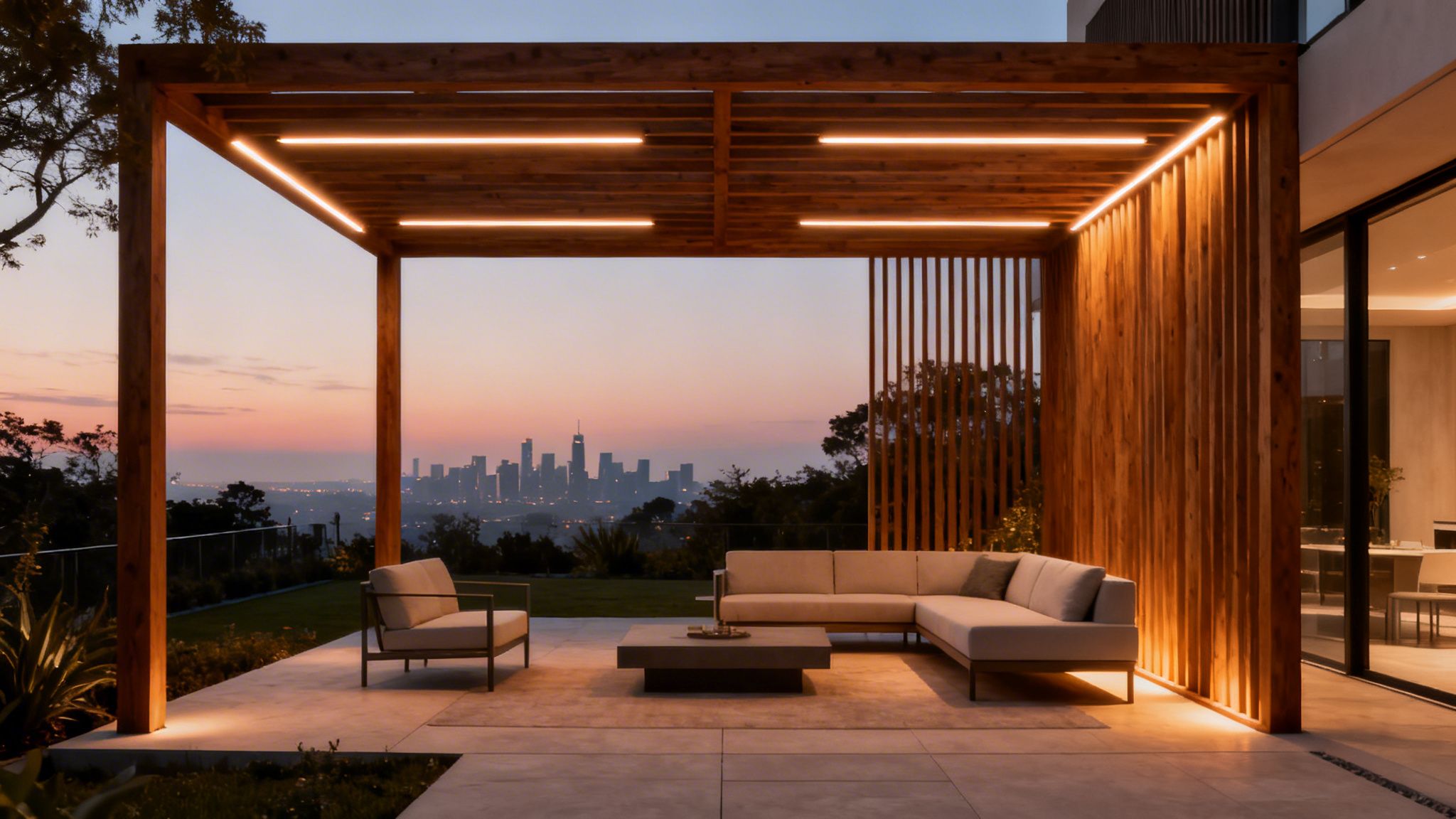
We engineer and install high-efficiency infrared heating systems that are completely hidden within your patio’s architecture. This is the perfect approach for our clients in discerning communities like Colleyville and Grapevine, who've invested in stunning outdoor living areas and won't compromise on the final look.
Seamless Integration, Uncompromised Style
Our entire process is about making the heating system a part of your patio's design from the ground up. Forget about mounting a heater to a wall or ceiling. We build our heating elements directly into your overhead structure, tucking them away inside pergolas, awnings, or custom soffits.
The result? You get a clean, sophisticated outdoor living area with zero visible hardware.
You feel the same powerful, direct radiant heat that warms you and your guests, but the system itself is completely invisible. It's the ultimate in "invisible comfort"—all the warmth, none of the clutter. The system feels like it was part of the original architect's plan all along.
The Perfect Fit for DFW's Luxury Spaces
This tailored approach is exactly what premier homes and commercial venues across Tarrant County are looking for. For a restaurant owner in Arlington or Fort Worth, it means creating a cozy and profitable patio without distracting diners with bulky heaters. For a homeowner in Keller or North Richland Hills, it means enjoying their backyard oasis year-round without spoiling its design integrity.
The JetStream Difference: We don't just sell heaters; we engineer year-round comfort. By concealing the hardware, we make sure the only things you and your guests notice are your beautiful patio and the great moments you create there.
The rising demand for these integrated solutions is part of a bigger picture. The global patio heaters market is expected to grow by USD 1,059.4 million between 2024-2030, expanding at an 8.2% CAGR. This growth is heavily skewed toward electric models, driven by eco-regulations and a desire for the kind of high-performance, seamless systems we specialize in. You can read more about the patio heater market trends to see how the future is electric.
Ultimately, while plenty of options can warm a patio, only a truly integrated system can do it without disrupting the visual harmony of your space. For our clients throughout the Mid-Cities—from Hurst and Euless to Bedford—this seamless integration is the true mark of luxury outdoor living. It’s the comfort you deserve, delivered with the elegance your home demands.
Common Questions About Electric Patio Heaters
We get a lot of questions from homeowners and businesses in Euless and across the DFW area about outdoor electric lamp heaters. Getting the right information is the first step toward taking back your patio from that North Texas chill.
Whether you're in Colleyville, North Richland Hills, or right here in Hurst, we hope these answers help clear things up as you look for the best way to heat your outdoor space.
Are Electric Heaters Expensive to Run?
This is probably the number one question we hear from clients all over Tarrant County. The short answer is no, especially when you compare them to the endless cycle of buying propane tanks.
Electric infrared technology is incredibly efficient, converting over 90% of its energy into radiant heat you can actually feel. You're paying to warm people and furniture, not the empty air around them. That means far less wasted energy and a much lower cost per hour to run.
Can I Use an Extension Cord with My Heater?
For any powerful, hardwired electric heater, the answer is a firm no. These units draw a significant amount of power, and a standard extension cord simply can't handle that load. Plugging one in creates a very real fire hazard.
Some smaller, portable units might allow for a heavy-duty, outdoor-rated cord, but you have to check the manufacturer's specs. For any permanent installation, a dedicated circuit installed by a professional is non-negotiable.
When it comes to the safety and performance of your heating system, there are no shortcuts. Following the guidelines is the only way to ensure your system works safely and gives you years of reliable warmth, whether you're in Bedford, Arlington, or Fort Worth.
Do Electric Heaters Work in the Wind?
Yes, and this is where they really shine compared to gas heaters. Since infrared technology warms objects and people directly, a gust of wind won't simply blow all your heat away.
That breeze that often sweeps across Mid-Cities patios can still feel cool, of course, but the radiant warmth from the heater remains steady on your skin. Gas heaters, on the other hand, can have their flames flicker or even blow out completely in winds as low as 10 MPH.
How Much Maintenance Do They Require?
For busy homeowners and restaurant managers in Grapevine and Keller, this is a huge plus: electric heaters require almost no maintenance.
There are no tanks to refill, pilot lights to fuss with, or burners to scrub. All you really need to do is give the reflectors a quick wipe-down once a season to keep them free of dust. That simple step is all it takes to have reliable heat at the flip of a switch.
For a truly seamless heating solution that disappears into your architecture, trust the experts at JetStream Outdoor Cooling & Heating. We design and install custom, concealed infrared systems that deliver powerful warmth without compromising your patio's style. Contact us for a free estimate.